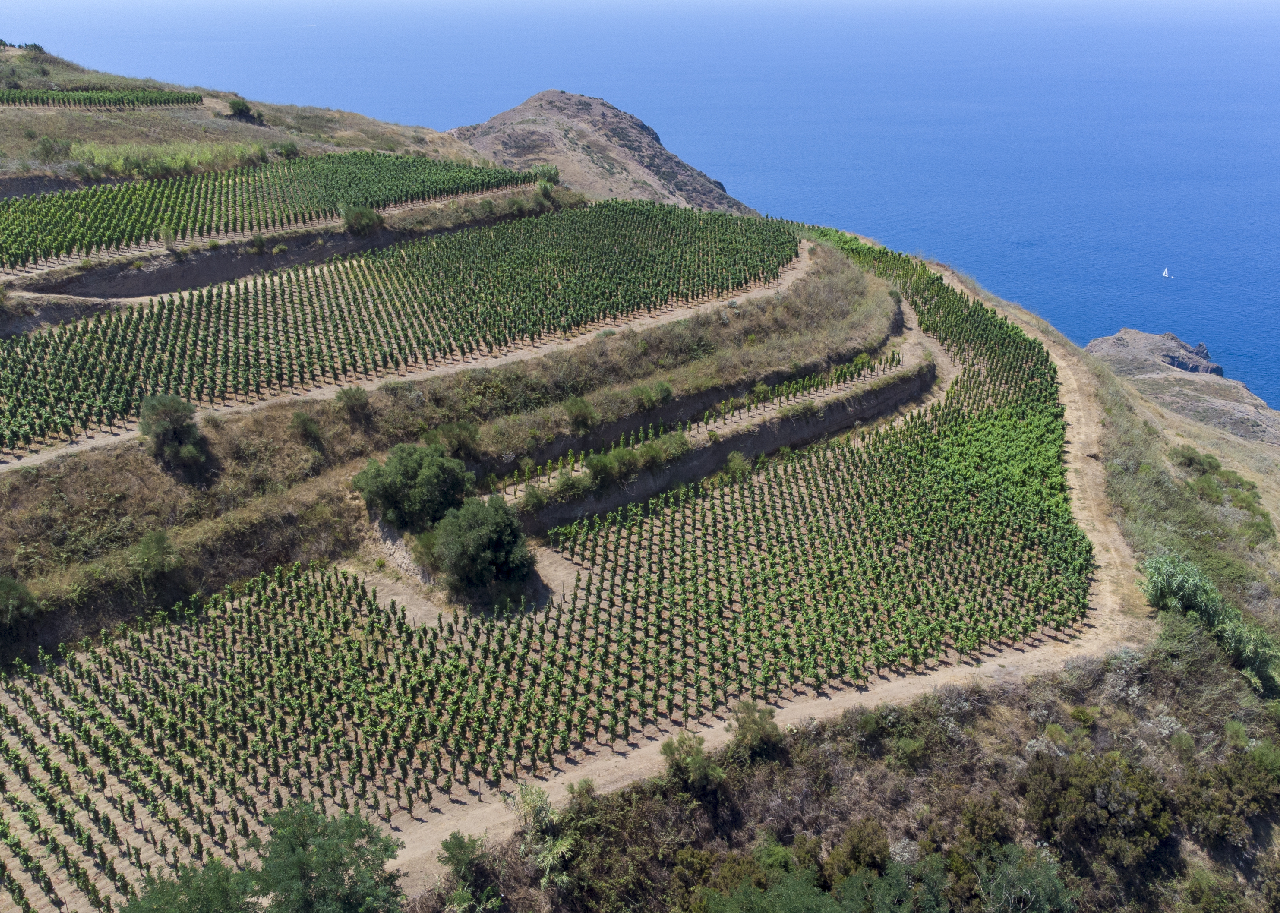
There is much more to a vineyard than its position on a map.
Topography, closely linked to geology, plays a crucial role in the concept of terroir and has a significant influence on the vineyard’s microclimate.
The Influence of Topography on the Microclimate
While large-scale weather systems may be predictable, at a local level topographic features such as elevation, exposure, and slope can alter these patterns. These factors determine how much solar radiation and heat a vineyard receives. A moderate slope facilitates the drainage of cold air from the vineyard, thereby improving the microclimate.
Drainage and Volcanic Soil of the Castellaro Plain
Water drainage is closely related to altitude and slope. In their search for water, vine roots grow deeper, absorbing a greater quantity of trace elements from the soil. This process enhances the expression of terroir characteristics in the resulting wines.
The volcanic soil of the Castellaro plain, rich in pumice stones, obsidian, kaolinite, and volcanic lapilli, offers a variety of sites with different microclimates and soils. At Tenuta di Castellaro, through precise micro-vinification, we aim to express all these nuances in the wine.
The Diversity of Lipari: Geographic Characteristics
The island of Lipari offers a wide range of landscapes and unique topographic features. Its volcanic origin is evident in the rock formations, hills, and mountains that shape the territory, influencing both the natural environment and human activities, from viticulture to tourism.
Lipari features a complex and varied topography, dominated by the central mountainous relief of Monte Sant’Angelo, which reaches an altitude of approximately 602 meters. This mountain, together with other smaller elevations, creates valleys and plateaus that offer spectacular views of the sea and the surrounding islands. The hillsides are often covered with lush Mediterranean vegetation, including vineyards and olive groves that thrive on mineral-rich volcanic soils.
The coastline of Lipari is equally diverse, with rugged and jagged stretches alternating with sandy and pebbled beaches. Another distinctive feature is the presence of pumice quarries, which have created unique landscapes marked by white pumice hills contrasting sharply with the deep blue of the sea.
Topography of Lipari: Influence on Culture and Traditions
The topography of Lipari has not only shaped the natural environment but has also profoundly influenced local culture and traditions. The hills and mountains, with their fertile soils, have enabled the cultivation of high-quality vineyards. Cultivated terraces, valley paths, and narrow roads connecting ancient settlements, now properties of Tenuta di Castellaro, bear witness to a long history of adaptation and sustainable use of the land.
Lipari, with its volcanic hills, rugged coastline, and quarries of volcanic materials, offers a fascinating and diverse landscape. This variety of geographical features not only contributes to the island’s natural beauty but has also shaped its history and culture, making Lipari a place of great interest for geologists, historians, and tourists alike.